Gallbladder and Food: What to eat and What to Avoid
Feeding plays a key role in gallbladder-related symptoms, especially in people with stones.
Although the diet does not eliminate stones, it can help reduce crises and improve well-being until definitive treatment.
 |
Dr. Luís Couceiro - Clínica da Vesícula · | Apr 12, 2026 · 1 min read |
| |
Dr. Luís Couceiro - Clínica da Vesícula |
| Apr 12, 2026 · 1 min read |
Why does food influence the gallbladder?
The gallbladder stores bile, which is released to aid in the digestion of fats.
When eating fatty foods:
The gallbladder contracts
May trigger pain if stones exist
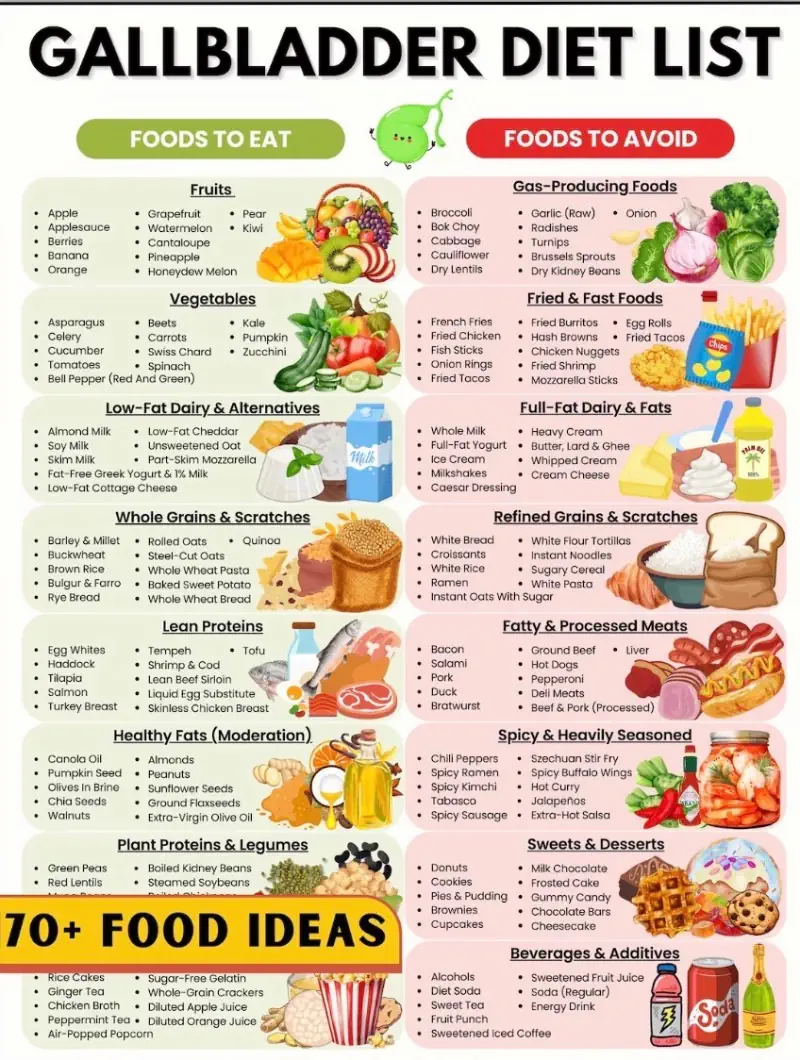
⚠️ Foods to avoid
To reduce symptoms, it is advisable to avoid:
❌ Fats and fried foods
French fries
Fast food
Fatty meats
❌ Dairyfat
Cream
Cured cheeses
Whole milk
❌ Processed
Sausages
Industrial food
High-fat❌ candy
Cakes
Pastry
These foods increase the risk of pain and seizures.
✅ What to eat
A lighter diet helps control symptoms:
✔️ Lean proteins
Chicken
Peru
Fish
✔️ Vegetables
Broccoli
Carrot
Courgette
✔️Fruit
Apple
Pear
Banana
✔️ Whole grains
Brown rice
Oats
What should food be like on a daily basis?
Small, frequent meals
Avoid large amounts of fat
Cooking with light methods:
Grill
Cooked
Steam
️ What about after the surgery?
After gallbladder removal:
Most patients can return to a normal diet
In the firstdays:
Light diet
Gradual introduction of fats
❓ Can diet prevent surgery?
No.
Feeding can relieve symptoms, but:
Does not dispose of stones
Does not solve the problem definitively
If there are frequent symptoms:
🏁 surgery is usually the best solution.
🗓️ When to look for review?
Pain after meals
Repeated crises
Diagnosis of gallstone
✅ Conclusion
Proper nutrition can help control gallbladder symptoms, but it does not replace definitive treatment when symptomatic disease exists.
A medical evaluation is essential in deciding the best approach.
🩺 Next steps
Book an appointment for personalised assessment and guidance.